Every year, workers suffer serious injuries—or worse—because machinery unexpectedly powers on during maintenance. These incidents aren’t random accidents. Most are preventable with one proven system: the lockout and tagout procedure. When executed correctly, LOTO isolates hazardous energy sources, ensuring machines stay off until servicing is complete. Yet, despite being a decades-old standard, missteps remain common.
This guide breaks down the real-world application of lockout and tagout, from regulatory requirements to on-the-floor execution. You’ll learn how to implement an effective program, avoid critical errors, and safeguard your team with consistency and clarity.
What Is Lockout and Tagout?
Lockout and tagout (LOTO) is a safety procedure used to ensure that dangerous machines and energy sources are properly shut off and cannot be restarted until maintenance or servicing is complete. The process involves two key actions:
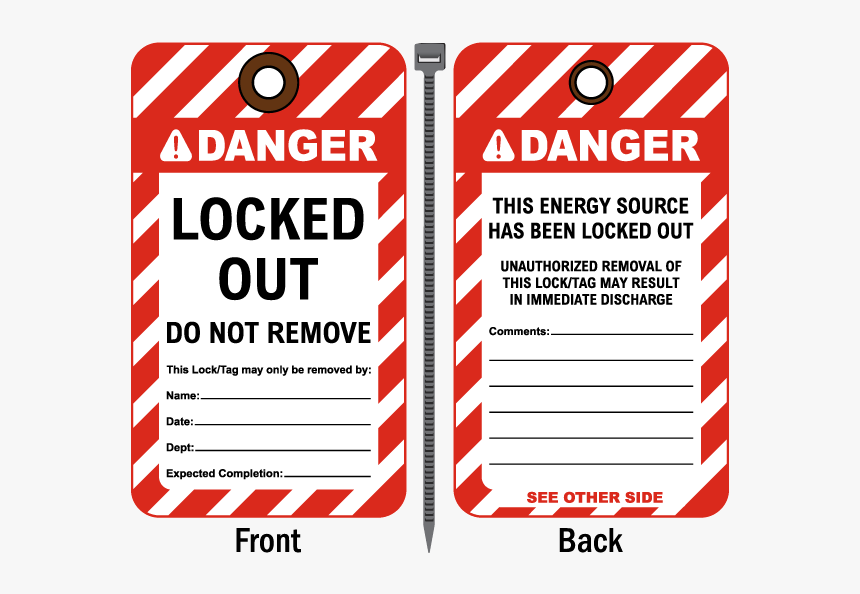
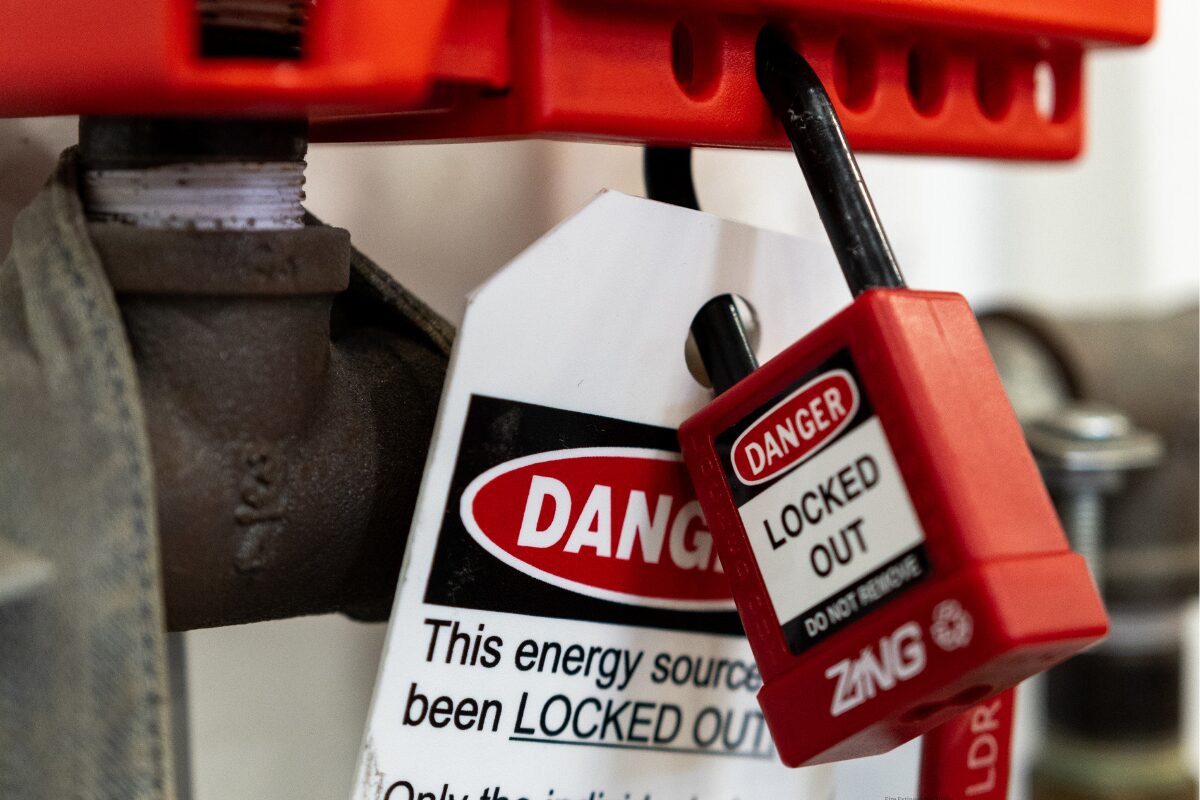
- Lockout: Physically securing an energy-isolating device with a lock to prevent re-energization.
- Tagout: Placing a warning tag on the same device to indicate that it must not be operated.
While both practices work together, lockout provides physical control, whereas tagout relies on communication and compliance. OSHA (Occupational Safety and Health Administration) requires that lockout methods be used whenever possible, because tags alone can be ignored or removed.
LOTO applies to various energy sources: - Electrical - Pneumatic - Hydraulic - Chemical - Thermal - Mechanical
Any equipment that could release stored energy and cause injury requires a proper LOTO procedure.
Why Lockout and Tagout Procedures Matter
The purpose of LOTO isn’t just regulatory compliance—it’s about eliminating risk. According to OSHA, failure to control hazardous energy accounts for nearly 10% of serious accidents in manufacturing. These incidents often occur during routine tasks like: - Clearing a jammed conveyor - Replacing a motor - Servicing a press or punch machine
Consider a real case: A technician at a packaging plant opened a filler machine to clear a blockage. The operator, unaware of the maintenance, restarted the system remotely. The result: severe crush injuries. A correct LOTO procedure would have prevented this.
Beyond human cost, ineffective LOTO practices expose organizations to: - OSHA fines (violations can exceed $15,000 per instance) - Operational downtime from incident investigations - Reputational damage and worker distrust
Effective energy control isn’t a paperwork exercise—it’s a frontline defense.
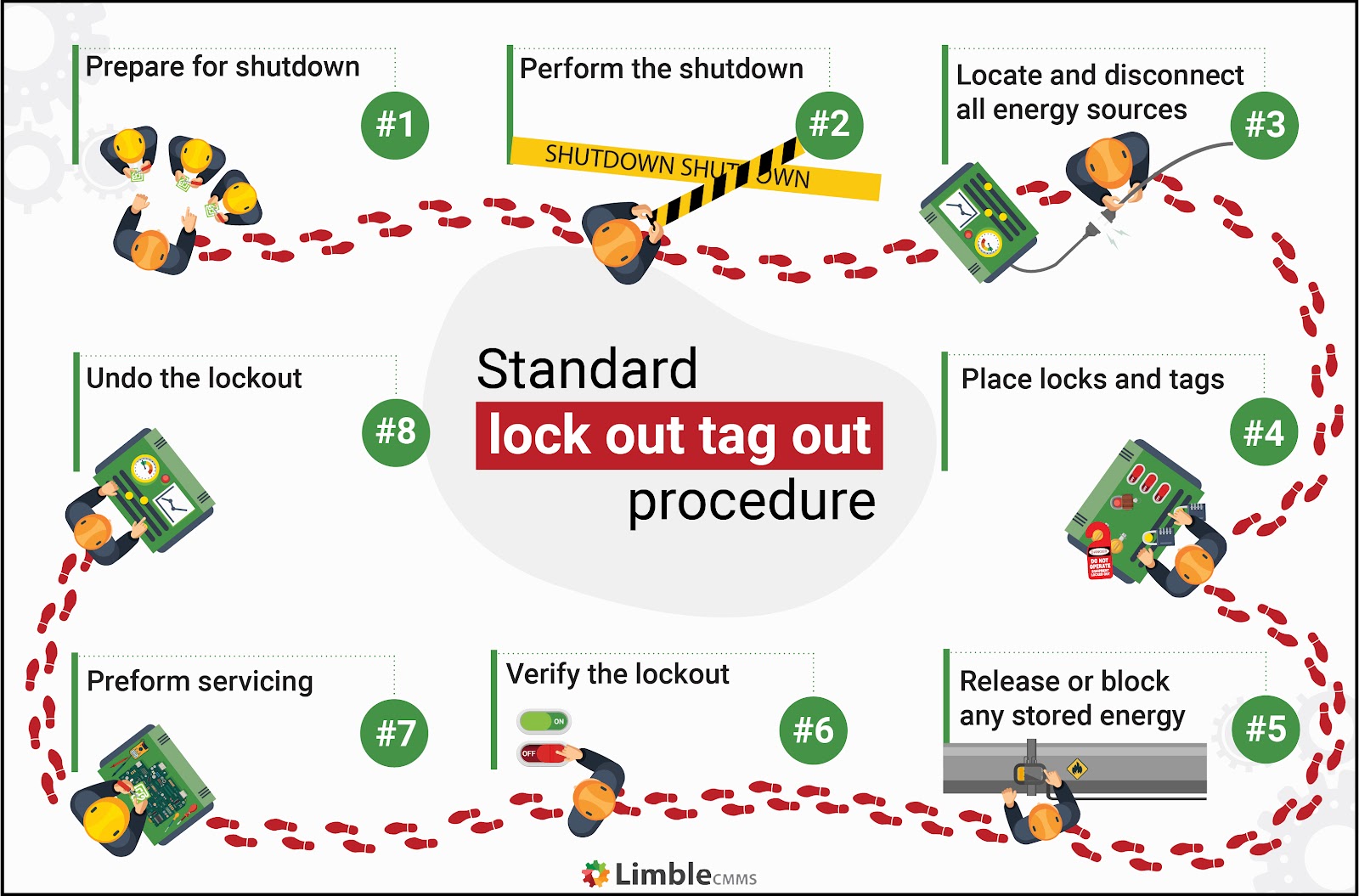
The 6-Step Lockout and Tagout Procedure
A reliable LOTO process follows a clear, repeatable sequence. Deviations increase risk. Here’s the standard workflow, aligned with OSHA 29 CFR 1910.147:
#### 1. Prepare for Shutdown Identify all energy sources powering the equipment. Review the machine-specific LOTO procedure. Gather necessary locks, tags, and tools. Notify affected employees that maintenance is beginning.
Common mistake: Assuming all energy sources are obvious. Hydraulic systems, for example, may retain pressure even after power is cut.

#### 2. Shut Down the Equipment Use normal stopping procedures (e.g., pressing stop buttons, closing valves). Ensure the machine has fully de-energized before proceeding.
Tip: Shut down upstream systems if they could indirectly activate the target equipment.
#### 3. Isolate Energy Sources Turn off circuit breakers, close disconnect valves, block moving parts, and disconnect energy supplies. This step removes all input energy.
Example: For a conveyor system, this means cutting electrical supply, closing air lines, and blocking rollers.
#### 4. Apply Locks and Tags Each authorized employee places their personal lock and tag on every isolated energy point. Group locks are used when multiple workers are involved, but each individual must apply their own lock.
Critical rule: Only the person who applied the lock can remove it.
#### 5. Release Stored Energy Relieve, disconnect, or block residual energy. This includes: - Bleeding hydraulic lines - Depressurizing air tanks - Discharging capacitors - Lowering suspended loads
Real-world gap: Workers often skip verifying zero energy. Always test the controls (e.g., press start button) after isolation to confirm the machine won’t operate.
#### 6. Verify Isolation Attempt to restart the machine using its normal controls—this is the “tryout” phase. If it doesn’t start, isolation is confirmed. Return controls to “off” or “neutral” afterward.
This final check is non-negotiable. Never assume isolation worked—prove it.
Who Is Responsible for LOTO?
OSHA distinguishes between two roles:
- Authorized Employees: Those who perform maintenance and apply LOTO devices. They must be trained in energy control procedures and understand the hazards of specific equipment.
- Affected Employees: Operators or workers who use or work near the equipment but don’t perform maintenance. They need awareness-level training to recognize when LOTO is in use and never attempt to start locked-out machines.
Misclassifying employees is a frequent compliance failure. A maintenance supervisor can’t delegate LOTO training to a general safety video and call it sufficient. Hands-on, equipment-specific instruction is required.
Common LOTO Mistakes and How to Avoid Them
Even organizations with LOTO programs make critical errors. Awareness is the first step toward correction.
| Mistake | Consequence | Solution |
|---|---|---|
| Using master or generic locks | Unauthorized removal of locks | Issue individual locks with employee names |
| Skipping stored energy release | Unexpected startup from residual power | Include bleed-down steps in every procedure |
| Incomplete equipment-specific procedures | Inconsistent application | Develop clear LOTO steps for each machine |
| Allowing tag-only systems without justification | Reliance on compliance over physical control | Use locks wherever feasible |
| Failing to retrain annually | Knowledge gaps | Conduct yearly refreshers and periodic audits |
One plant reduced LOTO violations by 70% simply by adding visual checklists at each energy isolation point. Clarity prevents complacency.
Equipment-Specific LOTO Considerations
Not all machines behave the same. Tailor your procedures to the equipment.
- Robotic Systems: May have multiple control cabinets and backup batteries. LOTO must cover all control nodes.
- Conveyors: Often interlinked; lockout one section, and others may still pose risk. Isolate the entire line if necessary.
- Boilers and Pressure Vessels: Require extended cooldown and pressure release. Tags should indicate “Do Not Pressurize.”
- CNC Machines: May have programmable logic that auto-restarts. Hard disconnects are essential.
A food processing facility learned this the hard way when a cleaning crew entered a mixer without isolating the hydraulic agitator. The stored pressure released, causing a blade to shift. No one was hurt—but the near-miss triggered a full procedural overhaul.
Key Components of a LOTO Program
An effective program goes beyond individual procedures. It includes:
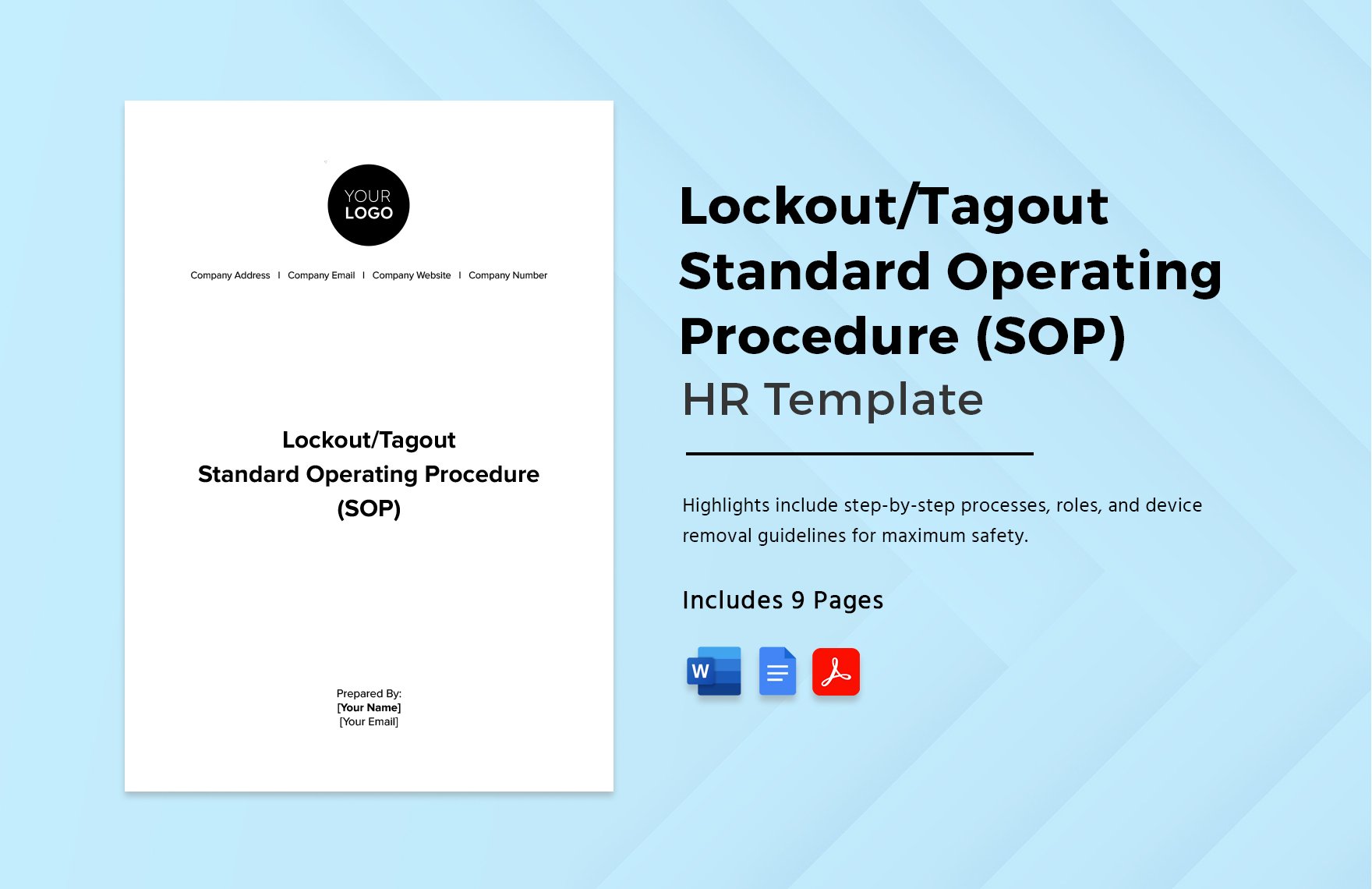
- Written energy control procedures for each piece of equipment
- Inventory of all machines requiring LOTO
- Employee training records
- Periodic inspections (at least annually) of LOTO practices
- Lockout devices (locks, tags, hasps, valve covers, plug locks)
Inspection findings must be documented and used to correct gaps. During one audit, a manufacturer discovered that 30% of lockout points were missing tags. The fix? Color-coded tags and a maintenance checklist integration.
Use standardized lockout kits to ensure consistency. These typically include: - Personal padlocks (keyed differently for each worker) - Warning tags with space for name, date, and reason - Lockout hasps for multi-person control - Circuit breaker locks - Valve lockouts
Brand matters less than durability and compliance with ANSI/ASSE Z244.1 standards.
Lockout and Tagout Devices: 5 Reliable Options
Choosing the right hardware supports compliance and usability.
| Product | Type | Best For | Key Feature |
|---|---|---|---|
| BradyLockout BL3 | Padlock | High-traffic environments | Weather-resistant, multiple key options |
| Master Lock 1390D | Circuit Breaker Lockout | Electrical panels | Fits most standard breakers |
| SPCO LOTO-VALVE | Valve Lockout | Pneumatic/hydraulic systems | Universal fit, UV-resistant |
| Grainger 4XW72 | Lockout Hasp | Group lockout | Accepts up to 6 locks |
| Seton 2SP56 | Tagout Tag | Clear communication | Durable polyester, pre-printed warnings |
Avoid low-cost, off-brand locks that degrade quickly. A failed lock is a broken safety system.
Sustaining a Culture of LOTO Compliance
Procedures on paper mean little without cultural enforcement. Leaders set the tone.
- Supervisors must never pressure workers to bypass LOTO for speed.
- Encourage peer accountability—workers should feel empowered to stop unsafe acts.
- Recognize teams that maintain perfect LOTO records.
One refinery implemented a “Lock of the Month” award, highlighting workers who identified LOTO risks. Participation in safety audits rose by 40% within a quarter.
Technology can reinforce habits. Some facilities use digital LOTO systems with QR codes on machines. Scanning pulls up the correct procedure, tracks lock application, and logs verification steps. While not a replacement for physical locks, it adds accountability.
A properly executed lockout and tagout procedure is the backbone of safe maintenance. It’s not just about following OSHA rules—it’s about ensuring every worker returns home unharmed. Start by auditing your current practices, correct gaps in training or equipment, and make LOTO a visible, non-negotiable standard. Consistency, clarity, and accountability turn procedure into protection.
Implement one change this week: review your three most frequently serviced machines and verify their LOTO procedures are documented, accessible, and being followed correctly.
FAQ
What should you look for in Lockout and Tagout Procedure: A Practical Safety Guide? Focus on relevance, practical value, and how well the solution matches real user intent.
Is Lockout and Tagout Procedure: A Practical Safety Guide suitable for beginners? That depends on the workflow, but a clear step-by-step approach usually makes it easier to start.
How do you compare options around Lockout and Tagout Procedure: A Practical Safety Guide? Compare features, trust signals, limitations, pricing, and ease of implementation.
What mistakes should you avoid? Avoid generic choices, weak validation, and decisions based only on marketing claims.
What is the next best step? Shortlist the most relevant options, validate them quickly, and refine from real-world results.