Machines don’t stay off just because you hit stop. Residual energy in electrical, hydraulic, pneumatic, or mechanical systems can turn a routine repair into a life-altering accident. That’s why knowing how to lockout tagout (LOTO) isn’t just a compliance checkbox—it’s a lifeline. Thousands of workers are injured each year during servicing and maintenance, and nearly all of those incidents are preventable. This guide walks you through the real-world execution of LOTO, not just the theory.
What Is Lockout Tagout and Why It Matters
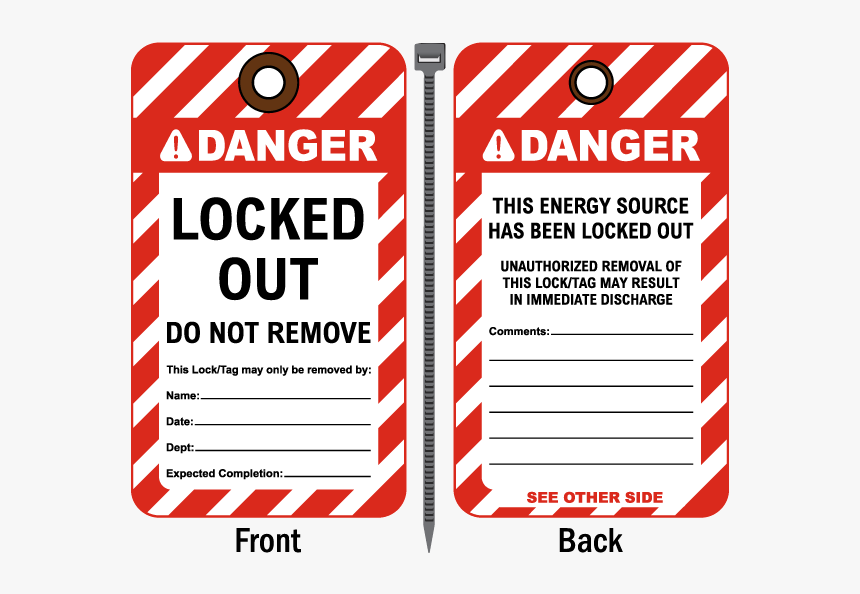
Lockout tagout is a safety procedure that ensures machines are completely shut down and isolated from all energy sources before maintenance or servicing begins. “Lockout” refers to physically securing energy-isolating devices—like circuit breakers or valves—with a lock. “Tagout” means attaching a warning tag that identifies who locked the system, when, and why.
The goal? Eliminate the risk of unexpected startup or release of stored energy.
In practice, LOTO prevents crushing injuries, electrocution, burns, and amputations. OSHA estimates that proper lockout tagout procedures prevent 120 fatalities and 50,000 injuries annually in the U.S. alone. Industries like manufacturing, utilities, transportation, and construction rely on LOTO because the cost of failure is measured in lives, not dollars.
But LOTO isn’t just a single step—it’s a system. And like any system, it only works when everyone understands their role and follows the process without shortcuts.
The 6 Critical Steps of Lockout Tagout
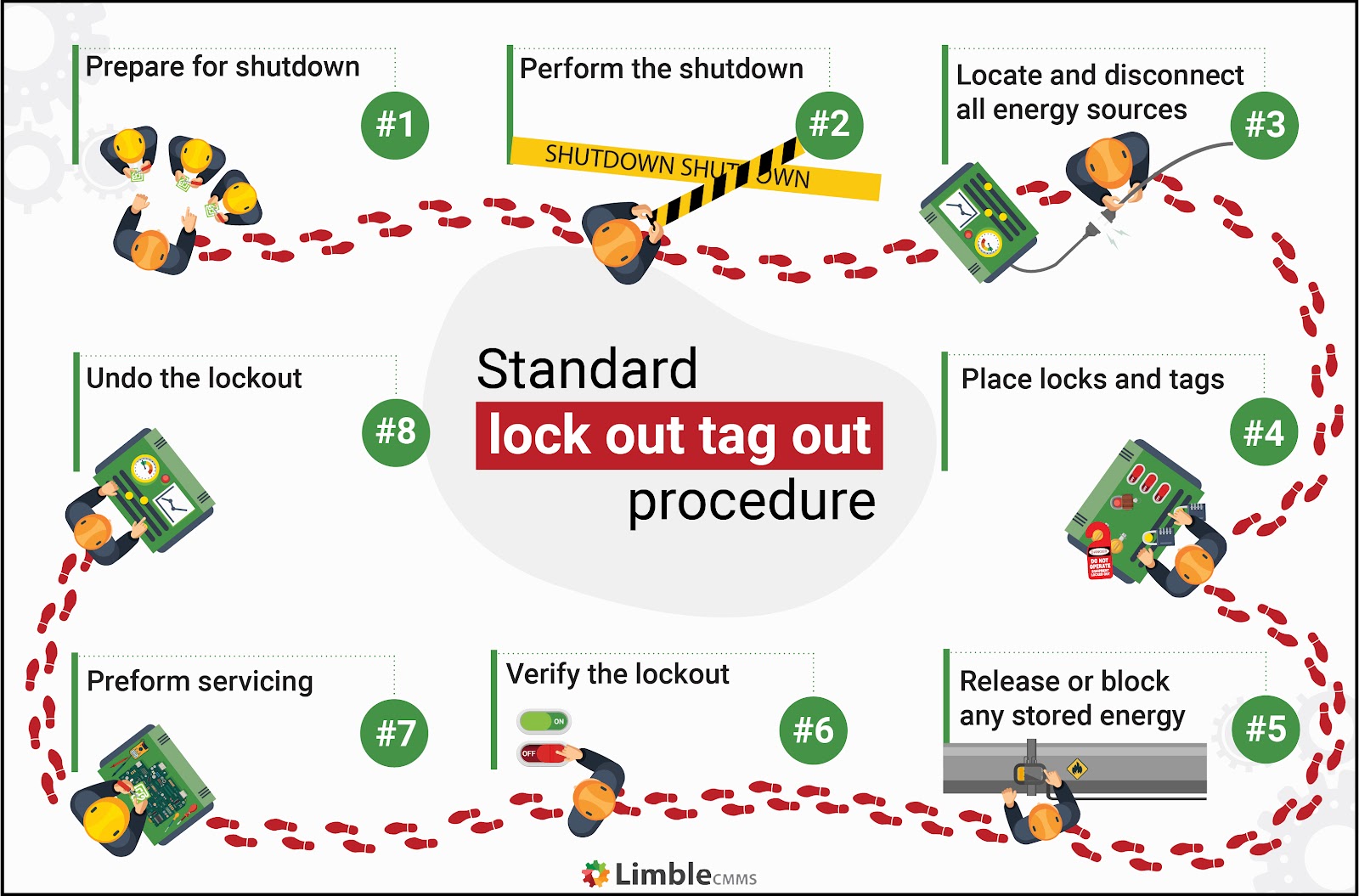
A successful LOTO procedure follows a defined sequence. Skipping or rushing any step compromises safety. Here’s how it’s done correctly.
1. Prepare for Shutdown
Before touching a machine, maintenance staff must know exactly what energy sources power it—electrical, hydraulic, pneumatic, chemical, thermal, or gravitational. This requires prior documentation. A plant manager shouldn’t be guessing whether a conveyor line has a hydraulic accumulator during an emergency repair.
Preparation includes reviewing the machine-specific LOTO procedure, gathering necessary locks and tags, and notifying affected workers about the upcoming shutdown.
Example: A technician servicing a large industrial oven must identify that it runs on natural gas and 480V electricity. Both must be isolated.
2. Notify and Shut Down the Equipment
All operators and affected employees must be informed that maintenance is starting. Then, the machine is shut down using its normal stopping procedure—never just pulling the plug or tripping an emergency stop.
This step is often rushed. Workers assume “everyone knows,” but miscommunication leads to accidental restarts.
3. Isolate All Energy Sources
This is where real danger lurks. Simply turning off a control switch isn’t enough. You must shut off energy at its source.
For electrical systems, this means flipping the circuit breaker or disconnecting the power cord. For pneumatic lines, close and block the main air valve. Hydraulic systems require depressurizing and locking out the pump. Even gravity-powered systems (like elevated platforms) need mechanical blocking.
Each energy source gets its own lock and tag. One lock per person, one tag per lock.
4. Apply Locks and Tags

Each authorized employee applies their personal lock to every energy-isolating device. The lock must be durable, standardized, and non-releasable without a key. Tags must include: - Employee name - Date and time of lockout - Reason for the lockout - Contact information
Critical rule: No one else can remove your lock. If a worker goes home and leaves a lock on, a formal removal procedure must be followed—never bypassed.
Common mistake: Using a single master lock for multiple people. This violates OSHA’s requirement for individual accountability.
5. Release Stored Energy
Shutting off input doesn’t eliminate danger. Systems store energy in capacitors, springs, elevated parts, or pressurized lines. This energy must be safely released or dissipated.
For example: - Bleeding hydraulic lines - Draining capacitors - Lowering suspended parts - Allowing motors to cool
After release, verify the machine can’t start by trying to activate it—using only control functions, not force. If it moves or powers on, return to step three.
6. Perform Maintenance and Remove LOTO Safely
Once zero energy is confirmed, maintenance begins. After work is complete: - Clear tools and personnel from the area - Remove non-essential items from the machine - Notify all affected employees - Only then can locks and tags be removed—by the same person who applied them
Restarting the machine follows normal startup procedures. Never “test” a machine with workers near it.
Real-World LOTO Failures and What They Teach Us
Even experienced teams make mistakes. A 2023 OSHA report reviewed a fatal incident at a paper mill where a worker was cleaning a roller system. The machine had been tagged out, but the hydraulic line wasn’t locked. A colleague unknowingly re-pressurized the line, activating the roller.
The root causes? - Incomplete energy source identification - Lack of verification - Poor communication
Another case involved a maintenance worker using a buddy’s lock because he forgot his. When the shift ended, the lock was removed early—assuming the job was done. The machine started mid-repair.
These aren’t edge cases. They’re common breakdowns in the LOTO process: - Skipping stored energy release - Using temporary or makeshift tags - Allowing unauthorized lock removal - Failing to train new hires properly
Each failure reinforces the need for strict procedure, personal accountability, and continuous training.
Who Is Responsible for LOTO?
Two roles define LOTO responsibility:
- Authorized employees are trained to implement LOTO procedures. They shut down, isolate, lock, tag, and verify machines. They’re typically maintenance technicians, electricians, or engineers.
- Affected employees operate or use the equipment but don’t service it. They must understand that a tag means “do not operate” and never attempt to remove a lock or override a system.
Management owns the program. They must: - Develop machine-specific LOTO procedures - Provide locks, tags, and training - Conduct annual audits - Enforce compliance

A strong LOTO program isn’t maintained by policy alone—it’s sustained by culture. When everyone treats a lockout tag like a stop sign, safety becomes automatic.
Essential LOTO Equipment You Need
The effectiveness of LOTO depends heavily on the tools used. Standardized, durable equipment prevents improvisation and errors.
Here’s what every facility should have:
| Equipment | Purpose | Best Practice |
|---|---|---|
| Personal locks | Assign accountability | One lock per employee, keyed differently |
| Hasp or group lockbox | Multiple locks on one point | Use when several workers service one machine |
| Warning tags | Communicate danger | Include name, date, reason |
| Lockout hasps | Attach multiple locks to a single device | Avoid “community” locks |
| Cable locks | Secure valves, switches, or controls | Use weather-resistant models for outdoor equipment |
| Tryout switches | Test circuits safely during service | Only used after re-energizing with permission |
Using mismatched or flimsy locks invites complacency. A plastic tag that fades in sunlight or a lock that can be picked with a paperclip defeats the entire system.
Common Industries That Rely on LOTO
While LOTO applies broadly, some sectors depend on it more than others:
- Manufacturing: Conveyor belts, presses, robotic arms
- Energy and utilities: Transformers, turbines, boilers
- Construction: Cranes, lifts, excavation equipment
- Healthcare: Sterilizers, imaging machines, lab equipment
- Transportation: Aircraft ground systems, railcar movers, engine test stands
In hospitals, for example, a biomedical technician servicing an MRI machine must lock out both electrical power and cryogenic coolant systems. Skipping one could lead to explosive boil-off or electrical shock.
The method stays consistent—identify, isolate, lock, tag, verify—but the energy sources vary. That’s why machine-specific procedures are mandatory.
How to Audit and Improve Your LOTO Program
Compliance isn’t a one-time event. OSHA requires annual inspections of LOTO procedures, but smart companies do more.
Conduct surprise audits: - Watch a technician perform a full LOTO - Check that all energy sources are addressed - Verify tags are complete and locks are personal - Confirm stored energy was released
Use the audit to identify gaps. Was the procedure followed exactly? Did the worker verify zero energy? Was communication clear?
Common improvement areas: - Updating outdated LOTO instructions - Replacing worn tags or broken locks - Re-training employees who cut corners - Adding visual aids near high-risk machines
The best programs use near-miss reporting. If a worker almost started a tagged machine, treat it like an incident. Ask: Why wasn’t the tag clear? Was training insufficient?
Final Thoughts: Lockout Tagout Is Non-Negotiable
How to lockout tagout isn’t a technical question—it’s a human one. It asks: Do we value procedure over convenience? Accountability over assumption? Lives over production speed?
The steps are simple, but their execution demands discipline. A single oversight can erase years of safety records.
Start by documenting every machine’s energy sources. Train every authorized employee. Audit quarterly. Make LOTO as routine as wearing a hard hat.
When a technician walks up to a machine, sees a lock, and walks away—knowing that someone’s life depends on that metal hasp—then you’ve built more than a program. You’ve built a culture where safety isn’t enforced. It’s expected.
Frequently Asked Questions
What’s the difference between lockout and tagout? Lockout physically prevents energy restoration with a lock. Tagout uses a warning tag. Lockout is preferred; tagout is only allowed if it provides equivalent protection.
Can multiple people use the same lock? No. Each authorized employee must apply their own lock. Group lockout devices (like hasps or lockboxes) allow multiple personal locks on one point.
How often should LOTO procedures be reviewed? OSHA requires annual inspections. Best practice is to review procedures after any incident, near-miss, or equipment change.
Who can remove a lockout device? Only the employee who applied the lock may remove it. If that’s not possible, a formal, documented removal process must be followed.
Are temporary tasks exempt from LOTO? No. Any maintenance or servicing that exposes workers to unexpected energy release requires LOTO—even if it takes five minutes.
Do plug-in tools need LOTO? Yes, if they’re being serviced. The plug must be disconnected and locked out, or a plug lock applied.
What if a machine has no visible disconnect? The energy-isolating device must be identified and modified to allow lockout. OSHA requires machines to be equipped for LOTO.
FAQ
What should you look for in How to Lockout Tagout: A Step-by-Step Safety Guide? Focus on relevance, practical value, and how well the solution matches real user intent.
Is How to Lockout Tagout: A Step-by-Step Safety Guide suitable for beginners? That depends on the workflow, but a clear step-by-step approach usually makes it easier to start.
How do you compare options around How to Lockout Tagout: A Step-by-Step Safety Guide? Compare features, trust signals, limitations, pricing, and ease of implementation.
What mistakes should you avoid? Avoid generic choices, weak validation, and decisions based only on marketing claims.
What is the next best step? Shortlist the most relevant options, validate them quickly, and refine from real-world results.